
Winter driving has a way of exposing weaknesses you barely notice during the rest of the year. A tire that feels perfectly predictable on a dry September afternoon can become much less reassuring when the temperature drops and the road is covered in packed snow, slush, or a thin layer of ice.
That’s why choosing the best tires for winter weather isn’t simply a matter of finding an aggressive-looking tread pattern. You need to think about where you drive, how severe the winters are, and which tire characteristics actually improve traction when conditions get ugly.
Why Winter Conditions Demand Different Tires
Cold affects tires before the first snowflake even reaches the pavement.
As temperatures fall, the rubber compounds used in some tires become firmer. A harder tire can’t conform to small variations in the road surface as effectively, which can reduce available grip. Winter-focused tires use compounds designed to remain more flexible in cold conditions.
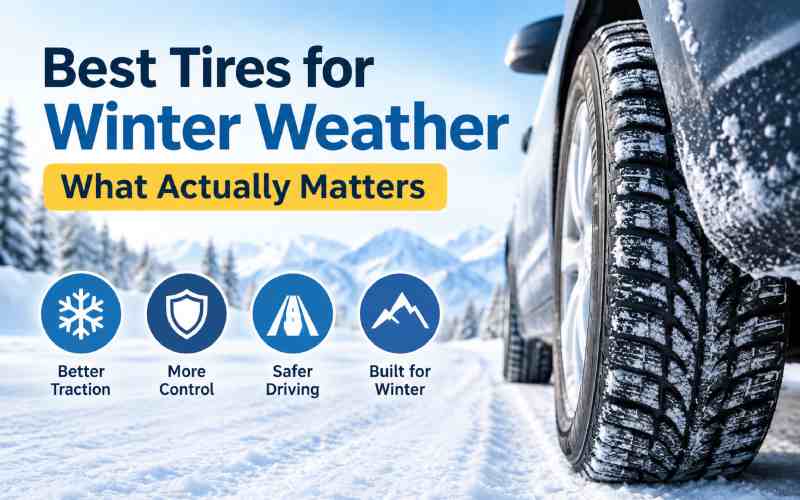
Then there’s the tread itself. Snow, ice, water, and slush create very different traction problems from dry pavement. Winter tires address these problems with tread designs intended to bite into slippery surfaces while moving snow and water away from the tire’s contact area.
This combination of tread design and cold-weather rubber is why simply having plenty of tread left doesn’t necessarily mean a tire is well suited to winter.
Start With the Weather You Actually Experience
“Winter” can describe dramatically different driving conditions.
One driver might deal with a handful of snowy mornings each year. Another might spend several months commuting over roads covered in snow and ice. Someone living in the mountains may encounter changing conditions within a single drive.
Your tire choice should reflect that reality.
Mild Winters
If your area mostly sees cold rain, occasional light snow, and temperatures hovering around freezing, a tire designed for broad year-round use with meaningful winter capability may make sense.
This can be especially attractive if you don’t want to maintain separate summer and winter sets.
Regular Snow and Ice
Drivers who routinely encounter packed snow, icy intersections, and freezing temperatures have a stronger case for dedicated winter tires.
These conditions place much greater demands on braking and cornering traction. That’s exactly where specialized winter compounds and tread patterns become valuable.
Severe Winter Conditions
Frequent storms, deep snow, steep roads, and persistent ice call for a more winter-focused setup.
At this point, convenience should take a back seat to traction. A tire that performs brilliantly on a warm highway isn’t much consolation when you’re trying to stop on an icy downhill section.
Look for the Three-Peak Mountain Snowflake
One of the easiest things to check when shopping is the Three-Peak Mountain Snowflake symbol, commonly shortened to 3PMSF.
You’ll recognize it as a mountain-shaped symbol containing a snowflake.
The marking indicates that the tire meets a defined performance standard for severe snow service. That’s more meaningful than simply seeing “M+S” or similar wording on a sidewall.
It doesn’t mean every tire carrying the symbol will perform identically. Tire construction, compound, tread design, vehicle weight, and road conditions still matter. Think of the symbol as a useful starting point rather than a guarantee that you’ve found the perfect tire.
Pay Attention to Siping
Look closely at the tread of a winter tire and you’ll usually see numerous small cuts across the tread blocks. These are called sipes.
They create extra biting edges that help the tire find traction on slippery surfaces.
When the tire rolls across packed snow or ice, those edges can help it maintain grip during acceleration, braking, and cornering. That’s why winter tread designs often look considerably more intricate than performance tires intended primarily for warm, dry pavement.
More aggressive isn’t automatically better, though. Tire designers have to balance winter traction with stability, steering response, noise, and wear.
Snow and Ice Aren’t the Same Problem
It’s easy to lump snow and ice together, but they present different challenges.
A tread pattern needs enough open space to work through snow and slush without becoming overwhelmed. Ice, meanwhile, gives the tire very little surface texture to grab.
That distinction matters when you’re choosing tires.
If your winters involve mostly deep or packed snow, snow traction may deserve greater priority. If freezing rain and icy roads are common, pay particularly close attention to tires designed for strong ice performance.
Consider the worst conditions you regularly encounter, not the nicest winter day you’re likely to drive through.
Don’t Ignore Wet-Road Performance
Winter doesn’t always mean snow.
Temperatures can rise during the day, turning accumulated snow into water and slush. Rain can arrive before temperatures fall again overnight. Roads may alternate between dry, wet, snowy, and icy surfaces within hours.
Your tires need to deal with those transitions.
Tread channels help move water and slush away from the contact patch. Maintaining effective contact with the pavement becomes especially important when standing water appears.
This is one reason buying purely on appearance isn’t a great strategy. A rugged tread may look prepared for a blizzard while telling you surprisingly little about how the tire behaves during cold rain.
Tread Depth Becomes More Important in Winter
A tire doesn’t suddenly become useless the moment its tread wears slightly, but winter performance can decline well before a tire reaches the legal minimum tread depth.
Snow requires space within the tread pattern. As tread wears down, there’s less depth available to manage snow, water, and slush.
Check your tires before winter rather than waiting for the first major storm.
Look across the entire tread surface. Uneven wear can be just as concerning as low overall tread depth because it may reduce the tire’s ability to maintain consistent contact with the road.
If you notice unusual wear on one edge or isolated areas, have the alignment and suspension checked as well.
Four Matching Tires Are the Safer Approach
Installing winter tires only on the driven axle might seem like a clever way to save money, but it can create an imbalance in available traction.
Imagine having significantly more grip at one end of the vehicle than the other. During a sudden turn or emergency maneuver, that imbalance can make the vehicle behave differently from what you expect.
A matching set of four gives the front and rear axles more consistent traction characteristics.
This applies even to all-wheel-drive vehicles. AWD can help a vehicle accelerate, but every vehicle still depends heavily on its tires when braking and turning.
Tire Pressure Still Deserves Attention
Cold temperatures can reduce tire pressure, so a set that was correctly inflated during warmer weather may need attention once winter arrives.
Check pressures when the tires are cold and follow the vehicle manufacturer’s recommended inflation specifications.
Don’t simply inflate to the maximum pressure printed on the tire’s sidewall. That’s not the same thing as the recommended operating pressure for your particular vehicle.
Regular checks are worthwhile throughout winter, especially when temperatures change significantly.
Choose for Your Driving, Not Someone Else’s
There isn’t one tire that’s automatically perfect for every winter driver.
A commuter dealing with cleared suburban roads has different requirements from someone regularly driving through mountain snow. Pickup and SUV owners may need different load capabilities than drivers of compact passenger cars.
Start with the correct tire size and load requirements for your vehicle. From there, consider your normal temperatures, snowfall, ice exposure, road type, annual mileage, and whether you’re willing to switch between seasonal tire sets.
The best choice is the one matched to the conditions you’ll actually face.
Make Winter Traction Part of the Whole Setup
Good winter tires can substantially improve your vehicle’s ability to deal with difficult conditions, but they can’t repeal physics.
Leave more stopping distance. Brake smoothly. Reduce speed before corners rather than during them. Avoid abrupt steering inputs when traction is limited.
Keep an eye on tread condition and inflation throughout the season, too.
Winter driving becomes far more manageable when your tires, vehicle maintenance, and driving habits are working together. Choose tires based on genuine cold-weather capability rather than appearance alone, and you’ll be much better prepared when an ordinary drive suddenly turns into a snowy one.

Julian Thorne is a distinguished Technical Strategist and Fintech Analyst with over 6 years of experience in digital payment architectures. Specializing in the integration of high-performance gateways like Xendit, he focuses on optimizing the intersection of gamification and online ticketing systems. Julian’s expertise lies in deconstructing complex payment flows and enhancing sales effectiveness through data-driven insights. His recent work deeply explores the evolution of digital event platforms in 2026, providing actionable strategies for global summits and large-scale ticketing infrastructures.
Learn more about our team OR Get in touch