
People love finishing things. Completing a puzzle, earning the final achievement in a video game, or filling the last empty spot in a collection can create a genuine sense of satisfaction. This feeling is so universal that psychologists have spent decades studying why human beings are naturally motivated by progress and completion.
The answer lies in the way our brains process rewards. We enjoy seeing measurable progress, and we feel a sense of accomplishment when we reach a goal. This principle explains why gamification has become such an influential concept in education, business, and technology. It also helps explain many everyday habits that might not seem connected to games at all.
From collecting favorite products to maintaining routines and earning loyalty rewards, people often engage in behaviors that resemble the mechanics of games far more than they realize.
The Human Brain Loves Progress
One of the most important ideas in gamification is visible progress. Video games keep players engaged by showing levels, badges, scores, and milestones. Every completed task provides a small reward that encourages continued participation.
The same principle appears throughout everyday life. People enjoy crossing items off a to-do list, tracking fitness goals, and watching their savings grow. Progress creates momentum and gives people a sense of control.
Collecting also taps into this psychological process. Building a collection involves clear objectives, gradual progress, and a satisfying feeling of completion. Every new addition feels like a small achievement. This is why so many hobbies, from collecting books to assembling sports memorabilia, remain deeply rewarding for people of all ages.
The Goal-Gradient Effect: We Speed Up Near the Finish Line
Research on loyalty programs has found that people accelerate their behavior as they get closer to a reward. Customers holding a coffee-stamp card, for example, tend to buy more often as the card fills up. The closer the goal feels, the more motivated we become. This is one of the reasons progress bars are such a common gamification tool.
The Endowed Progress Effect: A Head Start Helps
In a well-known car-wash loyalty card study by Nunes and Drèze, customers received a card that already had two stamps filled in. They were noticeably more likely to complete it than customers holding a blank card of the same overall difficulty. Starting with visible progress makes a goal feel achievable, which is why many gamified systems begin users with a small head start.
Everyday Habits Often Follow Gamification Principles
Many behaviors that seem ordinary actually rely on the same motivational mechanisms found in games. Loyalty programs award points, fitness applications track streaks, and shopping apps provide personalized recommendations that encourage continued engagement.
Consumers also enjoy exploring choices and building personal preferences over time. Retailers which offer numerous brands and product categories in one place, demonstrate how consumers often enjoy browsing and comparing options in ways that resemble collecting behaviors and achievement systems commonly discussed in gamification research. The process of discovering familiar products and returning to preferred selections can create a sense of routine and personal satisfaction. These patterns show that gamification is not limited to technology or entertainment. It frequently shapes everyday decisions in subtle but powerful ways.
Why Completion Feels So Satisfying
Psychologists often describe completion as a source of intrinsic motivation. People do not always need external rewards to continue pursuing a goal. The simple act of finishing something can be rewarding on its own.
This explains why unfinished tasks tend to remain in our thoughts. Humans naturally seek closure and feel driven to complete what they have started. The desire to reach an endpoint can be surprisingly powerful.
Collectors often experience this phenomenon. Completing a set or finding a long-sought item provides a sense of accomplishment that goes far beyond the object’s practical value. The reward comes from the journey as much as the destination.
The Zeigarnik Effect and the Pull of Unfinished Sets
In the 1920s, psychologist Bluma Zeigarnik observed that people tend to remember unfinished tasks better than completed ones. A half-finished collection works the same way: the empty slots keep nagging at us until they are filled. Later research has shown the effect is more nuanced than first believed, but the core idea still explains why an “8 of 10” progress indicator feels harder to ignore than a blank one.
Dopamine and the Thrill of Anticipation
Neuroscience suggests that dopamine is linked as much to anticipating a reward as to receiving it. That is why the hunt for a missing item can feel as satisfying as owning it. Surprise, such as a mystery reward or a rare find, adds to the excitement. Well-designed gamification uses this anticipation carefully rather than relentlessly.
Control, Order, and Identity
Collections also give people a small area of life they can fully control. Sorting, organizing, and displaying items creates order, and over time the collection becomes part of a person’s identity. This is why collectors often describe their sets as an expression of who they are.
The Role of Curiosity in Engagement
Another important element of gamification is curiosity. Games keep players engaged by encouraging exploration and creating opportunities for discovery. The same principle applies to many hobbies and consumer behaviors. People enjoy learning about different products, comparing options, and discovering something they did not know before. Curiosity turns ordinary activities into engaging experiences. It gives people reasons to continue exploring and creates opportunities for personal satisfaction.
According to MIT Sloan Management Review, successful gamification systems often rely on intrinsic motivators such as curiosity, progress, and a sense of achievement rather than simple rewards alone. People remain engaged when they feel they are learning, improving, or working toward meaningful goals. This insight helps explain why collecting and completion remain such enduring aspects of human behavior.
Why Routines Can Feel Rewarding
Gamification is often associated with competition and prizes, but consistency can be equally satisfying. Maintaining a routine creates a sense of order and progress. People frequently enjoy repeating familiar behaviors because those routines provide stability and predictability. Over time, ordinary habits can become meaningful rituals that contribute to a person’s sense of identity.
This is one reason why many individuals remain loyal to certain hobbies, products, and activities for years. Familiar routines often provide comfort as well as satisfaction. The pleasure comes not only from achieving a final goal but also from participating in the process itself.
How Collection Mechanics Work in Digital Products and Events
Collection mechanics are among the most effective tools in gamification because they combine several of the drives above in one simple structure. Common examples include:
- Badge and achievement sets: Milestones show users what they have done and what remains.
- Progress bars and completion percentages: These make the goal-gradient and Zeigarnik effects visible.
- Streaks: Keeping a streak alive adds a wish to avoid losing progress on top of the wish to gain it.
- Collectible sets: Splitting one large reward into smaller pieces keeps motivation steady between milestones.
- Rarity and surprise: Occasional rare rewards add anticipation and social recognition.
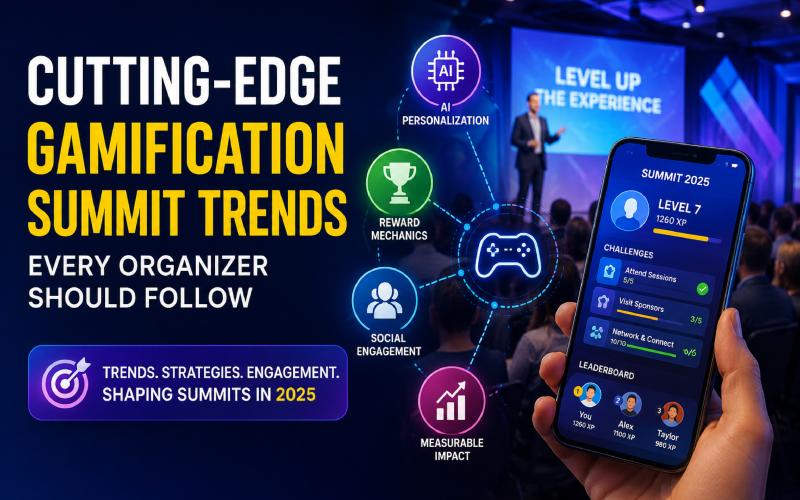
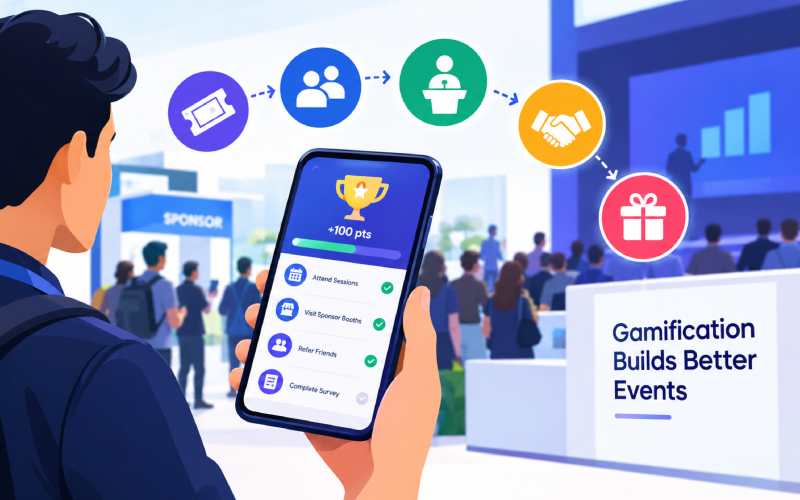
These mechanics appear in language-learning apps, fitness trackers, loyalty programs, employee training platforms, and event apps, where attendees might collect badges by visiting sessions, meeting sponsors, or completing challenges. Digital collections are also easy to personalize and scale, although they need strong visual feedback and a sense of ownership to make up for the lack of physical, tactile objects.
What Businesses Can Learn From Gamification
The principles behind gamification offer valuable lessons for organizations in every industry. People want to feel involved, make progress, and experience meaningful achievements.
Businesses that understand these motivations often create stronger relationships with their audiences. They recognize that engagement is not simply about selling products or providing services. It is about creating experiences that people genuinely enjoy.
The most successful platforms often encourage exploration, provide opportunities for personal choice, and allow individuals to feel a sense of accomplishment. These same ideas explain why hobbies, collections, and personal routines remain so appealing.
Best Practices for Collection-Based Gamification
- Make the goal reachable. A set should feel challenging but achievable, neither trivial nor endless.
- Give a head start. Begin users with visible progress to build early momentum.
- Tie rewards to real value. Badges should reflect genuine skill, learning, or contribution.
- Show progress clearly. Progress bars, counters, and visual slots make completion tangible.
- Mix predictability with surprise. Reliable milestones plus occasional delights keep the experience fresh.
- Refresh over time. New collections keep engagement going after a set is finished.
Where Gamification Can Go Wrong
The same psychology that makes collecting engaging can backfire when applied carelessly. External rewards added to something people already enjoy can weaken their intrinsic motivation over time, a pattern known as the overjustification effect. Sets that feel too large or never end lead to frustration, badges that mean nothing are quickly ignored, and pressure tactics such as artificial scarcity may lift short-term numbers while damaging trust. Responsible gamification respects the user’s time and autonomy.
The Joy of Finishing Something
Modern life can feel increasingly complex and unpredictable. In such an environment, completing a task or building a collection offers something deeply satisfying: a clear sense of progress.
Humans are naturally drawn toward goals, milestones, and experiences that provide closure. We enjoy seeing evidence of our efforts and appreciating how far we have come. This is why gamification has become such an influential concept across so many fields. It reflects something fundamental about human nature.
Whether someone is completing a puzzle, maintaining a routine, or pursuing a personal collection, the underlying motivation is often the same. People enjoy making progress, achieving goals, and experiencing the rewarding feeling that comes from completion.
In many ways, life itself is filled with small achievements and milestones. Recognizing and appreciating those moments may be one of the reasons certain activities continue to bring satisfaction year after year.

Julian Thorne is a distinguished Technical Strategist and Fintech Analyst with over 6 years of experience in digital payment architectures. Specializing in the integration of high-performance gateways like Xendit, he focuses on optimizing the intersection of gamification and online ticketing systems. Julian’s expertise lies in deconstructing complex payment flows and enhancing sales effectiveness through data-driven insights. His recent work deeply explores the evolution of digital event platforms in 2026, providing actionable strategies for global summits and large-scale ticketing infrastructures.
Learn more about our team OR Get in touch