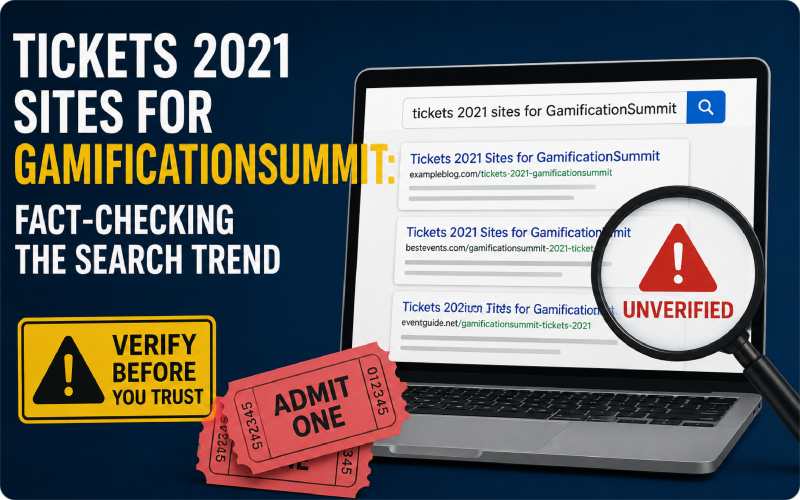
Type tickets 2021 sites for GamificationSummit into a search bar and dozens of near-identical articles appear, yet none of them lead to a working ticket page. That pattern is not an accident and it is not proof that a real event exists. This article traces where the phrase came from, why so many sites repeat it, and what it says about trusting a search result at face value.
The Phrase Traces Back to a Content Cluster, Not an Event
A close read of the pages ranking for this phrase shows the same structure repeated with small wording changes: a generic introduction about gamification, a vague list of ticket platforms, and no confirmed date, venue, or organizer contact. This is a known pattern in search results, where multiple sites target the same long-tail phrase with templated articles built for traffic rather than for a reader with a real question.
A single verifiable Gamification Summit did take place, but in 2011 in San Francisco, featuring speakers such as Jane McGonigal and Gabe Zichermann. Nothing in that record connects it to a 2021 edition or to the ticketing pages the search phrase surfaces today.
Why Search Engines Keep Showing These Pages
Search engines rank pages based on relevance signals such as keyword matches, page structure, and link patterns. A cluster of similarly worded articles can satisfy those signals without containing verified information, especially for a niche phrase with few competing sources. The result is a search page that looks thorough while actually repeating the same unverified claims across multiple domains.
This is not unique to gamification events. The same pattern shows up around ticket scams for concerts and sporting events, where fake listings mimic real event pages closely enough to rank and to fool a rushed buyer.
How to Read a Ticketing Search Result Critically
- Check whether the page names a specific, checkable organizer with contact details, not just a general description of the event.
- Look for the same claim confirmed on an independent source, not just repeated across similar-looking articles.
- Notice when several results share the same structure and phrasing, since that often signals a content cluster rather than independent reporting.
- Treat a missing date, venue, or confirmed speaker list as a sign to stop and verify before you trust the page.
Consumer protection agencies publish guidance built for exactly this situation. The New York Department of State’s consumer alert on event ticket scams lays out the same verification habits: confirm the seller’s contact information, match the event details across sources, and avoid paying outside a platform that offers buyer protection.
A Closer Look at the Repeated Language
Pages built around the same target phrase often reuse identical framing. Several articles ranking for tickets 2021 sites for GamificationSummit open with a near identical claim that the event is a must attend gathering for professionals and enthusiasts, then move into a generic list of ticket types such as general admission, VIP, and group rates, without ever naming a specific venue or confirmed speaker for that year. When several unrelated domains publish the same structure within months of each other, that pattern usually points to templated content produced at scale rather than independent coverage of a real event.
None of this means gamification as a field lacks real events. It means the specific combination of the phrase, the year 2021, and a confirmed ticketing page does not hold up under a direct check, which is exactly the gap this article set out to close.
What to Do Instead of Chasing the 2021 Listings
If your goal is simply to buy a ticket safely for a gamification event, a step by step guide to verifying gamification event ticket sites walks through the checks worth running before you pay. That approach solves the real problem search traffic around this phrase reflects: people want a safe way to register, not a history lesson about a page that no longer works.
Frequently Asked Questions
Is tickets 2021 sites for GamificationSummit a scam phrase or just outdated SEO content?
The pattern points to outdated and templated SEO content rather than an active scam operation, though the same lack of verification that lets this content rank could just as easily be used by a scam page. Treat both possibilities with the same caution.
Should I trust a page just because it ranks highly for this search?
No. Ranking reflects relevance signals to a search engine, not a fact check. Confirm event details independently before you trust any ticketing page, regardless of where it ranks.
Where can I learn more about spotting fake ticket sites in general?
Consumer protection agencies publish updated guidance on this topic regularly and are a more reliable source than a single blog post, since they track scam patterns across many event types rather than one search phrase.

Julian Thorne is a distinguished Technical Strategist and Fintech Analyst with over 6 years of experience in digital payment architectures. Specializing in the integration of high-performance gateways like Xendit, he focuses on optimizing the intersection of gamification and online ticketing systems. Julian’s expertise lies in deconstructing complex payment flows and enhancing sales effectiveness through data-driven insights. His recent work deeply explores the evolution of digital event platforms in 2026, providing actionable strategies for global summits and large-scale ticketing infrastructures.
Learn more about our team OR Get in touch