If you’ve been researching how gamification summit events accept payments, or you’ve simply seen the name “Xendit” pop up at checkout and wondered what it actually is, this guide is for you. No setup steps, no dashboard screenshots — just a plain answer to the question: what is Xendit, and why does it matter for people buying or selling tickets online?
What Is Xendit, in Simple Terms?
Xendit is a payment infrastructure company. In plain English, that means Xendit doesn’t sell products of its own — instead, it gives businesses (like event organizers, online stores, and ticket platforms) the tools to accept payments from their customers. Founded in 2015 and based in Southeast Asia, Xendit was built specifically to solve a problem that global payment companies often overlook: people in countries like Indonesia, the Philippines, Vietnam, Thailand, and Malaysia don’t all pay the same way a shopper in the US or Europe does.
Where a US-based checkout might assume everyone has a credit card, Xendit is built around the reality that most people across Southeast Asia prefer e-wallets, bank transfers, QR codes, or even paying in cash at a retail counter. So when a business — including a Gamification Summit-style event — uses Xendit, it’s really choosing to meet its audience with the payment methods they already trust and already use every day.
A Quick Background on Xendit
Xendit was founded in 2015 in Jakarta, Indonesia, at a time when online payments across Southeast Asia were still fragmented — every country, and often every bank, had its own separate way of moving money online, and there was no single, easy way for a growing business to accept them all. The founders built Xendit to solve that specific problem: one integration that could plug a business into the dozens of local payment methods people across the region already trusted, instead of forcing businesses to build separate connections to every bank and wallet provider one at a time.
Since then, Xendit has grown well beyond its original market, expanding into the Philippines, Vietnam, Thailand, and Malaysia, and raising significant funding along the way to build out its payment infrastructure. It’s used today by businesses ranging from small independent sellers to much larger platforms, across industries like e-commerce, travel, insurance, and — relevant to this site — event ticketing.
That growth matters for a simple reason: it means Xendit isn’t a small, unproven startup experimenting with payments. It’s an established infrastructure provider that a wide range of businesses, including event organizers running gamification summit-style conferences, rely on every day to actually get paid.
Who Actually Uses Xendit?
Xendit isn’t a consumer app you download — you won’t find it on your phone’s home screen. It works behind the scenes on other businesses’ websites and apps. You’ll typically encounter it when:
- Buying a ticket for an event, including gamification summit-style conferences with an international or Southeast Asian audience.
- Shopping on a small or mid-sized e-commerce site based in the region.
- Paying for a subscription or service through a company that operates in Indonesia, the Philippines, or nearby markets.
If you’ve ever seen a checkout page offer e-wallets like GCash, OVO, or ShopeePay, a QR code to scan, or a bank account number generated just for your purchase, there’s a good chance Xendit — or a similar regional payment processor — is working in the background.
What Payment Methods Does Xendit Support?
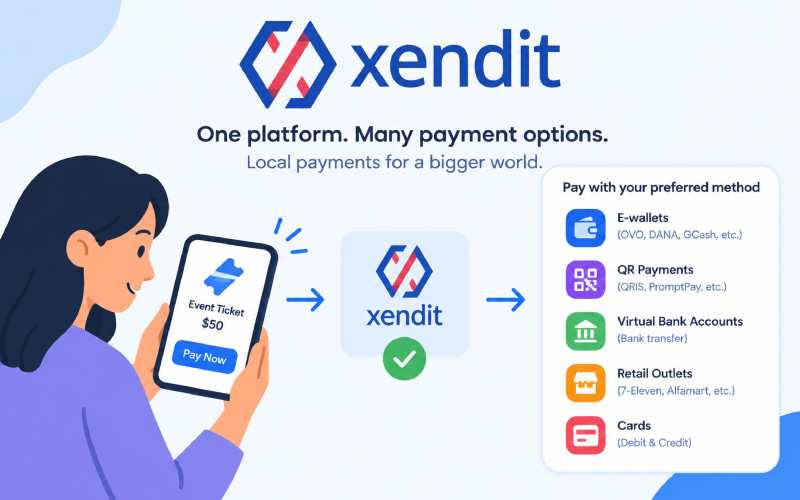
This is usually the part people actually want to know, especially if they’re about to pay for something and want to understand their options before clicking through. Xendit’s supported methods vary slightly by country, but generally include:
- E-wallets — such as OVO, DANA, and ShopeePay in Indonesia, or GCash and Maya in the Philippines.
- QR-based payments — including QRIS in Indonesia and PromptPay-style QR codes in Thailand, where you scan a code with your banking or wallet app instead of entering card details.
- Virtual bank accounts — a unique account number generated just for your transaction, which you pay into through your normal banking app like a regular transfer.
- Retail outlet cash payments — letting someone pay in cash at a physical counter (like 7-Eleven or Alfamart) using a code generated at checkout, useful for people without digital banking.
- Cards — standard debit and credit card payments, for buyers who prefer that option.
The exact mix depends on which country you’re paying from, since Xendit tailors its available methods to what’s actually common in each market rather than offering one identical experience everywhere.
How Does Xendit Actually Work, Step by Step?
It helps to walk through what happens behind a purchase, even without getting into technical setup details. From a buyer’s side, a typical Xendit-powered payment looks like this:
- You choose a payment method at checkout — an e-wallet, a QR code, a virtual bank account, a card, or a retail cash option, depending on what the business has enabled and what’s available in your country.
- Xendit generates the specific details for that method — a QR code to scan, a unique bank account number to transfer into, or a redirect to your wallet app to approve the charge.
- You complete the payment through your own bank, wallet, or card, not through a form on the merchant’s site asking for sensitive account credentials.
- Xendit confirms the payment back to the business automatically, usually within seconds for e-wallets and QR payments, or within a few minutes for bank transfers that need to clear.
- The business’s system — in this case, an event’s ticketing page — issues your confirmation or ticket once it receives that confirmation, without anyone needing to manually check whether you paid.
None of this requires you, as a buyer, to create a Xendit account or download anything new. The entire process happens using apps and accounts you already have.
How Does Xendit Make Money, and What Does It Cost Merchants?
As a buyer, you generally won’t see a separate “Xendit fee” line item — pricing and any fees are set by the business you’re paying, not displayed to you directly by Xendit. On the merchant side, though, it’s worth understanding the basic model: Xendit charges businesses a transaction fee for each payment processed, which varies depending on the payment method used (e-wallets, cards, and virtual accounts often have different fee structures) and the country the transaction takes place in.
This is similar to how most payment processors work globally — the business absorbs or factors in that cost, and it’s part of why some payment methods might be offered while others aren’t, depending on what makes sense for that organizer’s margins. If you’re an event organizer trying to understand these costs in more depth rather than as a buyer, our dedicated setup guide breaks down real fee figures pulled directly from Xendit’s documentation.
How Xendit Compares to Other Regional Payment Providers
Xendit is not the only payment infrastructure company in Southeast Asia. For example, Indonesia has providers like Midtrans and DOKU. Other countries also have similar regional payment processors. In general, these companies solve a similar problem. They connect businesses with local e-wallets and bank transfers. They also connect businesses with QR payment networks. As a result, companies avoid building each connection separately.
Xendit stands out because it covers several countries. Businesses can use one integration across multiple markets. These include Indonesia, the Philippines, Vietnam, Thailand, and Malaysia. This approach can simplify regional payment management. It also reduces the need for separate integrations. For businesses, this broader coverage can be a major advantage. Therefore, it can help events reach attendees across multiple countries.
As a buyer, you may not notice much difference. Your experience depends on available payment methods. For example, you might use an e-wallet, QR code, or bank transfer. However, the payment provider works quietly in the background. Therefore, your experience depends more on the business’s payment options. It depends less on which provider powers the checkout.
Is Xendit Safe to Use?
A fair question, especially since Xendit isn’t a household name the way a major international card network is. A few basics worth knowing:
- Xendit is a licensed and regulated payment provider across the Southeast Asian markets it operates in, not an unregulated third party.
- When you pay by virtual account, you’re not handing your bank login to the merchant’s website — you’re making a normal transfer through your own banking app to a generated account number.
- When you pay by e-wallet or QR code, authorization happens inside your own wallet or banking app, the same way it would for any other purchase you make with that app.
As with any online payment, it’s still worth double-checking that you’re on the actual merchant’s real checkout page before entering any details — that’s a general online safety habit, not something specific to Xendit.
Xendit vs. a Typical Card-Only Checkout
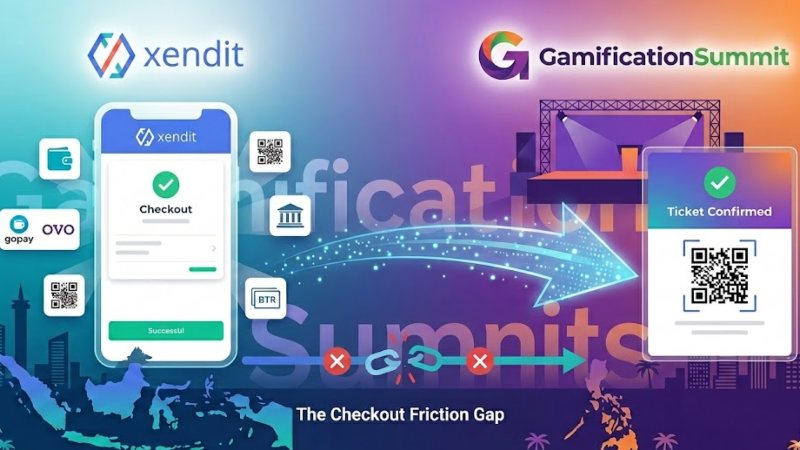
It’s easier to understand Xendit by comparing it with the alternative. A card-only checkout works well for some buyers. However, it excludes buyers without credit or debit cards. This matters more across many Southeast Asian markets. Xendit helps businesses close that payment gap. Instead, one integration supports multiple local payment methods. These include e-wallets, bank transfers, QR payments, and cash options. As a result, customers can choose methods they already use.
For an event like a Gamification Summit, payment options matter greatly. Attendees often join from Indonesia, the Philippines, Vietnam, Thailand, and Malaysia. However, payment preferences vary across these countries. Therefore, offering local payment methods can increase ticket sales. Otherwise, attendees may abandon checkout when their preferred option is unavailable.
Pros and Cons of Xendit, From a Buyer’s Perspective
Pros:
- Supports payment methods you likely already use daily (e-wallets, QR codes, bank apps), instead of forcing you toward a card you may not have.
- Doesn’t require creating a new account or downloading anything — you pay through apps you already trust.
- Virtual account and cash payment options make it accessible even to buyers without a credit or debit card.
- Confirmation is generally automatic, so you’re not left waiting on a manual email from the merchant.
Cons:
- Bank transfer confirmations aren’t instant, which can feel uncertain if you’re not expecting the short delay.
- Fee transparency depends entirely on the merchant’s checkout design — Xendit itself doesn’t show you a breakdown as the buyer.
- Method availability varies by country, so a payment option that works for a friend in another region might not appear for you.
- As a lesser-known name outside Southeast Asia, first-time buyers unfamiliar with the brand may briefly hesitate before paying.
A Short Glossary of Terms You Might See at Checkout
- Virtual Account (VA): A unique, temporary bank account number generated just for your specific purchase, used to receive your transfer and match it automatically to your order.
- QRIS: A standardized QR code payment system used in Indonesia, allowing many different e-wallets and banking apps to scan the same code.
- E-wallet: A mobile app (like GCash, OVO, or DANA) that holds digital balance and can pay merchants directly, without needing a physical card.
- Payment Gateway: The broader category of service that securely processes a payment between a buyer, a merchant, and the buyer’s bank or wallet — Xendit is one example of this.
- Settlement: The point at which the money from your payment actually transfers into the merchant’s account, which can happen on a slightly different timeline than your ticket confirmation.
Common Questions About Xendit
Is Xendit a bank? No. Xendit is a payment infrastructure provider, not a bank. It connects businesses to banks, e-wallets, and other payment rails, but it doesn’t hold your money the way a bank account does.
Do I need an account with Xendit to pay through it? No. As a buyer, you don’t sign up for Xendit directly — you’re simply using your existing e-wallet, bank, or card through a checkout page that happens to be powered by Xendit on the business side.
Which countries does Xendit operate in? Xendit primarily serves Indonesia, the Philippines, Vietnam, Thailand, and Malaysia, with payment methods tailored to each of those markets.
Is Xendit only for large businesses? No. Xendit is used by everything from small independent event organizers to larger platforms, since its integrations are designed to be accessible without requiring a large in-house engineering team.
Final Thoughts
At its core, Xendit provides payment infrastructure for businesses. It helps businesses accept popular payment methods across Southeast Asia. As a result, businesses avoid building separate payment systems themselves. You won’t use Xendit like a typical mobile app. Instead, Xendit works quietly behind many online checkouts. For example, you might pay using an e-wallet or QR code. You might also use a generated bank account number. Therefore, you may already have experienced Xendit without realizing it.
If you’re specifically curious how this looks in the context of buying a Gamification Summit ticket, our other guides cover both the organizer’s setup process and a real, hands-on buyer’s test of what paying through Xendit actually feels like.
This article is intended as a general, educational overview and does not constitute financial advice. Payment methods, fees, and availability can change and may vary by merchant and country — always confirm current details on the payment provider’s official site before making a purchase.

Julian Thorne is a distinguished Technical Strategist and Fintech Analyst with over 6 years of experience in digital payment architectures. Specializing in the integration of high-performance gateways like Xendit, he focuses on optimizing the intersection of gamification and online ticketing systems. Julian’s expertise lies in deconstructing complex payment flows and enhancing sales effectiveness through data-driven insights. His recent work deeply explores the evolution of digital event platforms in 2026, providing actionable strategies for global summits and large-scale ticketing infrastructures.
Learn more about our team OR Get in touch