Buying a GamificationSummit ticket sounds simple. Open a browser, search the event, pick a site, and pay. But most people hit a wall fast — five different websites show up, prices vary, and you genuinely cannot tell which one is legitimate. That confusion costs attendees real money and sometimes their seat at the event entirely. This guide breaks down every major platform in the mix so you know exactly where to go and why.
What Makes a Ticket Platform Worth Using for GamificationSummit
Not every ticketing site handles the same job. Some build brand and community. Others just process payments. For GamificationSummit specifically, the platform question matters more than usual because the event itself is about engagement design — and attendees notice when the buying experience contradicts that.
A functional ticket platform for this summit needs to do four things well: deliver transparent pricing before checkout, process payments without redirecting you three times, send a confirmed ticket instantly, and work on mobile. Most platforms manage two of those. Few manage all four.
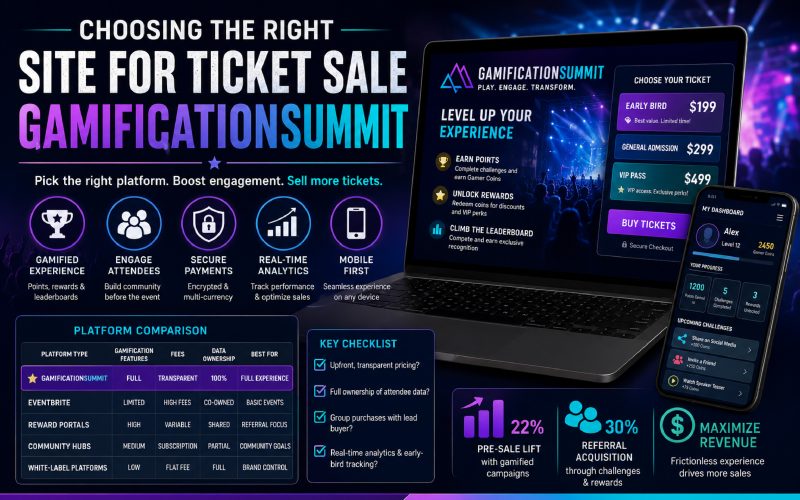
The GamificationSummit method for ticket sales runs on a specific three-phase model — pre-sale engagement, active purchase flow, and post-purchase referral — and the platform underneath that system shapes whether the whole thing works or falls apart.
The Official Platform: GamificationSummits.com
This is the only platform where you should complete your purchase.
GamificationSummits.com functions as the event’s primary ticketing hub. It handles multiple ticket tiers — general admission, early bird, and VIP — without requiring you to navigate to a third-party checkout. The site lists speaker information, event dates, and ticket availability in one place. Early bird pricing appears directly on the ticket page with clear deadline timestamps, which matters because those windows close faster than most people expect.
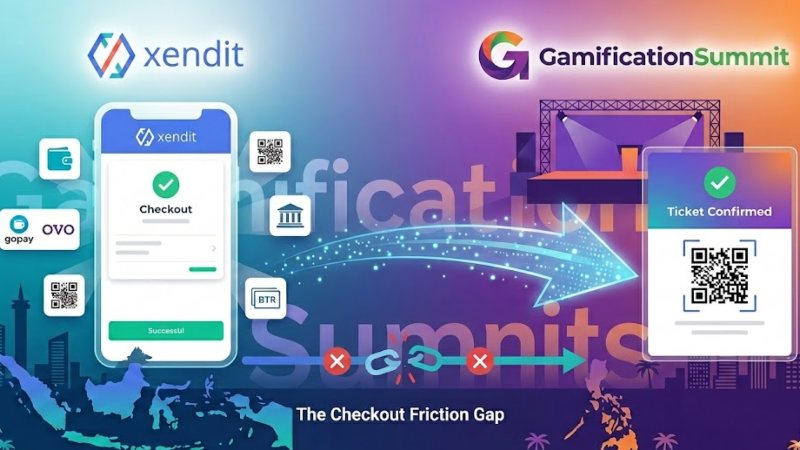
The checkout flow processes through Xendit, a payment infrastructure layer that supports credit cards, bank transfers, and digital wallets. Xendit handles currency conversion in real time, which is particularly relevant given that GamificationSummit draws attendees across Southeast Asia and beyond. The mobile version of the site is fully functional — you can browse tiers, select your ticket, and complete payment without switching to a desktop. Understanding how ticket sale effectiveness works at GamificationSummit starts with understanding that the platform is not separate from the event experience — it is the first interaction.
What works: Single-site checkout, Xendit-backed payment security, mobile-first design, direct access to early bird tiers.
What to watch: Early bird windows close without much notice. Bookmark the ticket page the moment you decide to attend, not when you are ready to buy.
Eventbrite: Discovery Tool, Not a Buying Destination
Eventbrite hosts a version of GamificationSummit listings because it drives organic discovery. Its marketplace reaches over 200 million ticketed events annually, so listing there increases search visibility. For organizers, that exposure is free marketing. For buyers, it creates a confusion problem.
When you find GamificationSummit on Eventbrite, the listing does not always reflect the current pricing tiers available on the official site. Eventbrite charges organizers a service fee of 3.7% plus $1.79 per ticket, along with a 2.9% payment processing fee per order. Those fees either get absorbed by the organizer or passed to you at checkout. On a mid-tier summit ticket, that difference adds up.
Eventbrite works well as a starting point for discovery — especially if you are browsing upcoming events without a specific summit in mind. It does not work as your final buying destination for GamificationSummit because pricing accuracy, ticket availability, and support response speed are all managed through official channels. If something goes wrong with an Eventbrite purchase, resolution routes through Eventbrite’s support team, not the GamificationSummit organizers directly.
Use Eventbrite to find the event. Buy through GamificationSummits.com.
Ticketmaster: Built for Venues, Not Summits
Ticketmaster controls more than 70% of the large-venue ticketing market in the United States and serves as the default platform for arenas, stadiums, and NBA or NHL venues. Its infrastructure handles massive on-sale surges that smaller platforms cannot match.
For a focused professional summit like GamificationSummit, Ticketmaster is simply not the right fit. The platform requires venue partnerships and enterprise contracts — it is not self-service. Independent event organizers cannot list on Ticketmaster without a venue affiliation agreement. Average primary market ticket fees on Ticketmaster run at approximately 34% above face value based on recent ticketing market data. That fee structure reflects a platform designed for high-demand consumer events, not professional development summits.
If you see a GamificationSummit ticket listed on or near Ticketmaster infrastructure, treat it with caution. The platform does not host this event through official channels.
AXS: Social Features, Wrong Audience
AXS (pronounced “Access”) is owned by AEG and functions primarily as the ticketing platform for AEG venues. It offers dynamic pricing, identity-based ticketing, and social sharing integrations that let buyers share event participation competitively.
Those social features align conceptually with gamification principles — sharing, competing, and unlocking rewards through participation are exactly what GamificationSummit covers in its programming. But AXS venue-lock creates the same barrier as Ticketmaster: independent organizers cannot simply list on the platform without a corporate venue relationship.
AXS works best when the event is held at an AEG-affiliated venue and the organizer has an existing contract. For the GamificationSummit model, which runs its own ticketing infrastructure through Xendit, AXS adds no functional value for the buyer.
Third-Party Resellers: The Sites That Cost You Most
Search for GamificationSummit tickets on any major search engine and reseller sites appear quickly — sometimes above the official listing. These sites purchase tickets in bulk, list them at marked-up prices, and offer no guarantees about legitimacy.
The risk is real. People have paid twice the face value for tickets to this event through reseller sites. Others have purchased tickets that turned out to be fraudulent. The GamificationSummit support team cannot assist buyers who purchased through unofficial channels because there is no transaction record on their end.
The comparison of websites for GamificationSummit tickets consistently points to one pattern: buyers who use the official site avoid every support issue that reseller buyers face.
If you land on a ticket site and the checkout does not show Xendit or another recognized payment processor, stop. That is the clearest signal you are on the wrong platform.
Platform Comparison Table
| Platform | Official Channel | Mobile Performance | Fee Transparency | Best Use Case |
|---|---|---|---|---|
| GamificationSummits.com | Yes | Excellent | Full | Buy tickets here |
| Eventbrite | Discovery only | Good | Partial | Find the event |
| Ticketmaster | No | Good | Low (high fees) | Large venue events only |
| AXS | No | Good | Moderate | AEG venue events only |
| Reseller Sites | No | Varies | None | Avoid entirely |
What the Checkout Experience Actually Looks Like
On GamificationSummits.com, the purchase flow runs in a straight line. You land on the ticket page, see available tiers with prices and deadlines displayed clearly, select your ticket type, and move to checkout. The Xendit payment page appears within the same session — you do not get redirected to an external domain mid-transaction.
After payment confirmation, a digital ticket arrives by email within minutes. The ticket contains a QR code for event entry. If you bought an early bird tier and coin redemption was active during the pre-sale period, any discounts apply automatically at checkout — you do not need to enter codes manually.
The entire process from landing page to confirmed ticket takes under five minutes on a mobile phone with a stable connection. That speed is not accidental. The GamificationSummit ticket sale method treats the checkout as a designed experience, not just a transaction endpoint.
Early Bird Tiers: How They Actually Work
GamificationSummit runs multiple ticket pricing phases. Standard early bird pricing opens first and carries a genuine discount off the full ticket price. As each tier sells out, the next pricing level activates automatically.
The common mistake is waiting. People plan to buy “next week” and find that the early bird window closed two days earlier. The tier system is real — not a marketing fiction — and each stage has a hard close. Once the tier fills, the lower price does not come back.
Group purchases follow a similar structure. Organizers offer group rates for attendees registering together, but those rates require coordinated purchasing through the official site. Splitting a group purchase across platforms breaks the group discount eligibility.
For anyone researching the full picture of how ticket sale effectiveness operates at this event, the GamificationSummit ticket sale effectiveness data shows that early buyer engagement through the pre-sale challenge system produced a 22% lift in pre-sale volume in 2024 compared to the prior year.
Why Mobile Matters More Than It Used to
Most ticket purchases for professional events now happen on mobile devices. The Mordor Intelligence 2026 Online Event Ticketing Market Report puts mobile transactions at 58.95% of total ticketing volume globally. GamificationSummit’s buyer base skews toward digital-native professionals who default to mobile for everything.
GamificationSummits.com passes the mobile test. The page loads without layout breaks on standard smartphones, the ticket tier selector works with thumb navigation, and the Xendit checkout processes without requiring a desktop switch. Eventbrite also performs well on mobile but, as covered above, is not the right final buying destination.
Ticketmaster and AXS both have capable mobile apps but are irrelevant here because neither platform hosts GamificationSummit in an official capacity.
The Referral Dynamic Most Buyers Miss
GamificationSummit builds a referral loop into its ticketing system. After you complete your purchase, a referral dashboard activates immediately. You receive a personal referral link. When a friend uses that link to buy a ticket, you earn rewards — typically points redeemable for VIP upgrades or event merchandise.
This system generated 30% of total attendance at the 2024 event through referrals alone. That number explains why the post-purchase experience on the official site receives as much design attention as the pre-purchase experience. The platform is not just selling tickets — it is recruiting advocates.
Reseller sites and third-party platforms do not carry this referral infrastructure. If you buy through an unofficial channel, you start your GamificationSummit experience without access to the referral system, the coin redemption tools, or any of the pre-event engagement mechanics. You get a ticket. You miss the full experience.
A Practical Buying Guide
Go to GamificationSummits.com directly. Do not search for the event name and click the first result — verify the domain before you proceed. The official site carries all available ticket tiers, current pricing, and a Xendit-backed checkout that processes payments securely.
If you find the event on Eventbrite first, use that listing to read the event description and confirm dates. Then navigate to the official site to complete your purchase.
Ignore reseller sites entirely. If a price looks significantly lower than the official site, the ticket is either fraudulent or the sale has already ended and you are looking at outdated cached data.
For a full breakdown of how the event’s ticketing infrastructure works across pre-sale, purchase, and post-purchase phases, the Ticket Fairy’s 2026 event marketing analysis provides practitioner-level context on gamified ticketing ROI and referral mechanics — useful background for anyone who wants to understand why the system is designed the way it is.

Julian Thorne is a distinguished Technical Strategist and Fintech Analyst with over 6 years of experience in digital payment architectures. Specializing in the integration of high-performance gateways like Xendit, he focuses on optimizing the intersection of gamification and online ticketing systems. Julian’s expertise lies in deconstructing complex payment flows and enhancing sales effectiveness through data-driven insights. His recent work deeply explores the evolution of digital event platforms in 2026, providing actionable strategies for global summits and large-scale ticketing infrastructures.
Learn more about our team OR Get in touch