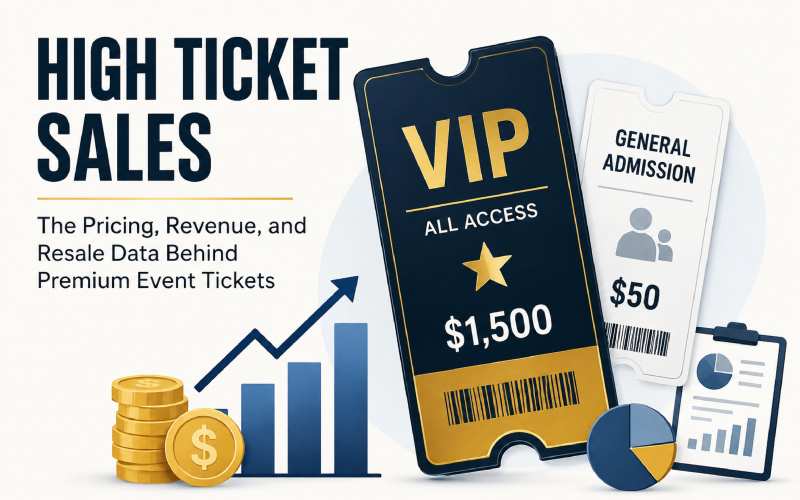
A $1,500 VIP pass to a summit is not a different product from a $50 general admission ticket. It is a different sale entirely. Premium event tickets follow the same rules as any other high ticket sales process: fewer buyers, longer decision time, and a much higher bar for proving the value before someone pays. This guide covers what high ticket sales means, how it applies to premium event tickets specifically, and the ticketing data organizers need to track to know whether their premium pricing is actually working.
What Is High Ticket Sales?
High ticket sales is the practice of selling premium-priced products or services rather than competing on volume. Most definitions place the threshold around $1,000 for individual buyers, with business-to-business deals often starting closer to $10,000. The price point is not the only thing that defines it. A high ticket sale is defined by a longer decision process, a smaller pool of buyers, and a sales approach built on trust and demonstrated value rather than discounting.
That definition maps directly onto premium and VIP event tickets. A buyer choosing a $1,200 VIP pass over a $150 general admission ticket is not making an impulse purchase. They are evaluating whether the added access, networking, and content justify the price, the same evaluation a buyer makes before any high ticket purchase.
How High Ticket Sales Principles Apply to Premium Event Tickets
Standard ticket sales optimize for volume: get as many people through checkout as possible. High ticket sales for a premium tier optimize for conversion quality instead. A summit selling VIP passes needs to answer one question clearly on the ticket page: what does this tier include that the standard tier does not, in specific, concrete terms.
Vague language like “exclusive access” undersells a high ticket item. Buyers evaluating a $1,000+ purchase want specifics: which sessions, which networking events, which speakers, and what happens if they cannot attend a promised session. The same consultative clarity that closes a high ticket B2B deal closes a premium ticket sale.
Ticketing Revenue and Average Ticket Value: What to Track
Average ticket value tells you more about pricing health than total ticket count does. An event that sells 500 general admission tickets at $100 generates the same revenue as one that sells 100 VIP tickets at $500, but the second event has a very different growth path: fewer people to manage, higher margin per attendee, and more room to invest in the experience each buyer receives.
Ticketing revenue should be tracked by tier, not just in aggregate. A platform-wide revenue number hides whether your premium tier is pulling its weight or whether nearly all revenue is coming from the cheapest ticket type, a sign the premium pricing needs rework rather than just more marketing spend.
| Metric | What It Tells You | Where to Track It |
| Average ticket value | Whether your premium tier is actually pulling the average up | Ticketing platform revenue report |
| Ticketing revenue by tier | Which price point drives the most total income, not just volume | Platform dashboard or CRM export |
| Ticket resale activity | Whether high-ticket buyers are reselling, which signals pricing or access issues | Resale marketplace data or platform resale tools |
| Early bird conversion rate | Whether urgency pricing is actually moving premium buyers or just standard ones | Ticketing sale platform analytics |
Ticket Data Analysis: Reading the Numbers Correctly
Raw ticket data becomes useful once it is broken down by tier, purchase timing, and channel. Ticket data analysis at a basic level means answering three questions: which tier sells fastest, which tier generates the most total revenue, and which tier has the highest resale or no-show rate.
These three answers rarely point to the same tier. A general admission ticket might sell fastest, a VIP tier might generate the most revenue per buyer, and a mid-tier ticket might have the highest resale rate because it sits in an awkward price gap. Ticket analytics only becomes actionable once you look at tiers separately instead of blending everything into one dashboard number.
Ticket Resale Analytics: What Resale Activity Actually Signals
Resale activity on a premium ticket is not automatically a bad sign, but the pattern matters. A small amount of resale close to the event, driven by legitimate schedule conflicts, is normal. A high volume of resale immediately after purchase often signals that the ticket was priced for scarcity rather than genuine demand, and buyers bought defensively rather than because they actually planned to attend.
Tracking resale by tier over time shows whether a premium ticket is being bought by people who want the experience or by people speculating on demand. The second pattern usually means the price needs adjusting, the perceived value needs clearer communication, or both.
Early Bird Pricing: Does It Work for High Ticket Items?
The best platform for early bird pricing triggers is the one that lets you set tier-specific windows rather than a single discount applied across every ticket type. Early bird pricing works differently for a high ticket item than it does for general admission. A small discount rarely moves a buyer evaluating a $1,000+ purchase. What moves that buyer is a real deadline tied to something they lose by waiting, an earlier session slot, a smaller VIP group size, or a bonus that will not be offered later.
Framing an early bird window as scarcity of value, not just scarcity of discount, is what makes early pricing triggers effective for a high ticket audience specifically.
Questions to Ask a Ticketing Platform Vendor Before You Commit
- Can the platform report revenue and average ticket value broken down by tier, not just in total?
- Does the platform track resale activity, or does that data disappear once a ticket changes hands?
- Can early bird windows be set independently for each ticket tier?
- What payment methods does the platform support for your specific audience and region?
- How quickly does revenue and analytics data update, in real time or in a delayed batch report?
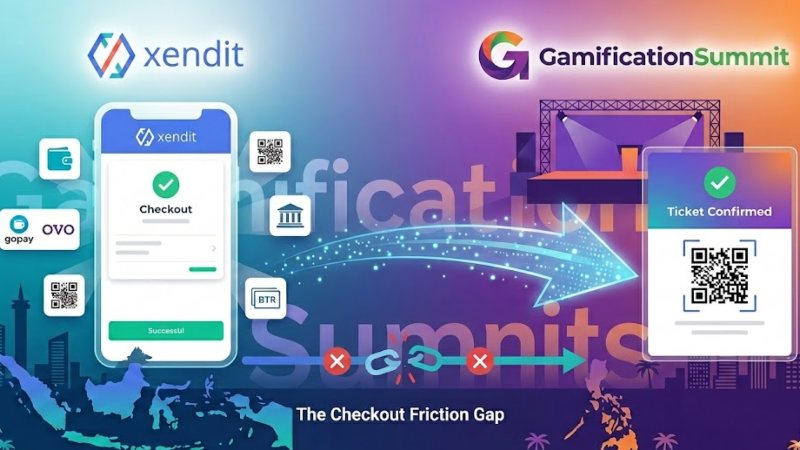
For a closer look at how payment processing affects this data, our breakdown of how Xendit works for GamificationSummit ticket payments covers the technical side of transaction tracking.
Frequently Asked Questions
What are some online ticketing websites that support tiered pricing?
Most major ticketing sale platforms support multiple tiers, though the depth of per-tier analytics varies significantly. Confirm tier-level reporting specifically before committing, rather than assuming it is included.
What counts as a high ticket item in the events industry?
There is no fixed line, but tickets priced from several hundred dollars up to several thousand, typically VIP, premium, or all-access passes, are generally treated as high ticket items within event pricing strategy.
How is the ticketing industry different for high ticket versus standard tickets?
Standard ticketing optimizes for volume and fast checkout. The high ticket segment of the ticketing industry optimizes for trust, clear value communication, and a slower, more deliberate buyer journey, closer to a consultative sale than an impulse purchase.
Julian Thorne is a distinguished Technical Strategist and Fintech Analyst with over 6 years of experience in digital payment architectures. Specializing in the integration of high-performance gateways like Xendit, he focuses on optimizing the intersection of gamification and online ticketing systems. Julian’s expertise lies in deconstructing complex payment flows and enhancing sales effectiveness through data-driven insights. His recent work deeply explores the evolution of digital event platforms in 2026, providing actionable strategies for global summits and large-scale ticketing infrastructures.

Julian Thorne is a distinguished Technical Strategist and Fintech Analyst with over 6 years of experience in digital payment architectures. Specializing in the integration of high-performance gateways like Xendit, he focuses on optimizing the intersection of gamification and online ticketing systems. Julian’s expertise lies in deconstructing complex payment flows and enhancing sales effectiveness through data-driven insights. His recent work deeply explores the evolution of digital event platforms in 2026, providing actionable strategies for global summits and large-scale ticketing infrastructures.
Learn more about our team OR Get in touch