Sponsored Content: This article includes a paid partnership with Maze Rooms. All opinions and design analysis reflect our own independent review.
Most gamification advice focuses on points, badges, and leaderboards. Escape rooms use a different lever entirely: urgency. A ticking clock, a locked door, or in some rooms, something actively chasing you, all push players to act faster and think under real pressure. Event organizers designing engagement around a summit or ticketed experience can learn directly from how escape rooms build that pressure on purpose.
Why Urgency Is a Core Gamification Mechanic
Urgency works because it removes hesitation. A player facing an open-ended puzzle with no time limit tends to overthink, but the same player facing a countdown commits to a decision and moves. This is the same mechanic behind flash sales, limited-time event registration windows, and countdown timers on a landing page.
Most escape rooms create urgency through a countdown clock alone. A smaller number of rooms add a second layer: physical movement under pressure, not just mental pressure against a timer.
Case Study: How Project Minotaur Builds Urgency Through Movement
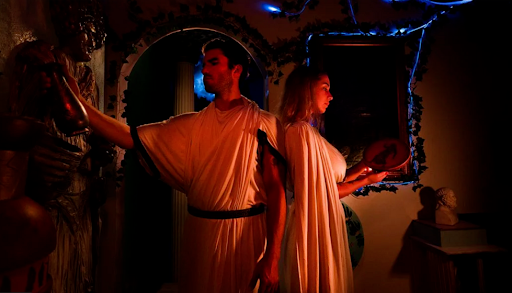
The project minotaur escape room in Los Angeles is a useful example of this second layer in practice. Instead of a static puzzle room with a countdown on the wall, the experience places a life-size, moving figure in the room with players, built around a Greek mythology theme. The urgency does not come from a clock. It comes from something in the space that is actively hunting the group.
This design choice changes player behavior immediately. Groups stop deliberating calmly over clues and start making faster, less perfect decisions, which is precisely the state most high-engagement gamified experiences try to create. The puzzles still require the same logic and teamwork as a standard escape room, but players solve them while their instinct to avoid the threat competes for attention.
The Psychology of Being Chased vs Being Timed
A countdown clock creates cognitive urgency. A physical threat creates a different kind of urgency that involves the body as well as the mind. Research on shared high-arousal experiences suggests that groups who go through this kind of pressure together tend to bond faster than groups who complete a calm, low-stakes activity.
This has a direct parallel in event design. A session with a hard deadline feels different from a session with an open-ended discussion, and a live, time-boxed challenge at a summit creates a sharper shared memory than a passive presentation does.
What Event Organizers Can Take From This
Few organizers can add a life-size chase element to a conference. The underlying design principle still transfers without needing a monster in the room.
Timeboxed challenges work well. A session capped at a hard 20 minutes, with a visible countdown, pushes attendees to engage rather than passively watch. Physical movement helps too. Booths, scavenger-hunt style prompts, or a room-to-room challenge format add the same kinesthetic pressure that a static, seated session cannot replicate, and each of these interactions doubles as a data point, which is the same layer we cover in our look at advanced gamification in modern event planning.
Group-based stakes also matter. Escape rooms work because the group succeeds or fails together, and the same shared-stakes design applied to a team challenge at an event creates a similar bonding effect.
Applying Urgency Design Without a Monster
An organizer does not need a physical actor to borrow this mechanic. A visible, honest countdown on a session or challenge is often enough to shift behavior, as long as the time pressure is real and not just decorative. Attendees notice quickly when a countdown does not actually mean anything.
The core lesson from escape room design is simple. Pressure, used deliberately and fairly, increases engagement more reliably than open-ended time does. Whether that pressure comes from a clock, a group deadline, or a chase mechanic, the underlying psychology is the same one driving gamification strategy across events and training programs alike.
Frequently Asked Questions
What makes an escape room feel urgent besides the timer?
Physical elements like a moving figure, a changing environment, or a countdown tied to a real consequence add urgency beyond a simple clock on the wall.
Can event organizers use chase-style urgency without a physical actor?
Yes. A hard time limit, a visible countdown, and group-based stakes recreate most of the psychological pressure without needing a costumed performer.
Does urgency design work for virtual events too?
It does. A visible countdown timer, a live leaderboard, or a time-boxed breakout challenge creates comparable urgency in a virtual or hybrid session.
Julian Thorne is a distinguished Technical Strategist and Fintech Analyst with over 6 years of experience in digital payment architectures. Specializing in the integration of high-performance gateways like Xendit, he focuses on optimizing the intersection of gamification and online ticketing systems. Julian’s expertise lies in deconstructing complex payment flows and enhancing sales effectiveness through data-driven insights. His recent work deeply explores the evolution of digital event platforms in 2026, providing actionable strategies for global summits and large-scale ticketing infrastructures.

Julian Thorne is a distinguished Technical Strategist and Fintech Analyst with over 6 years of experience in digital payment architectures. Specializing in the integration of high-performance gateways like Xendit, he focuses on optimizing the intersection of gamification and online ticketing systems. Julian’s expertise lies in deconstructing complex payment flows and enhancing sales effectiveness through data-driven insights. His recent work deeply explores the evolution of digital event platforms in 2026, providing actionable strategies for global summits and large-scale ticketing infrastructures.
Learn more about our team OR Get in touch